Introduction
In the GCC, promotions are not based on how long you have worked there; they are based on how much responsibility you can handle. Some professionals remain in the same role for years, while others move up within one or two appraisal cycles because they demonstrate stronger technical judgment, compliance awareness, and leadership readiness.
A structured cyber security course accelerates career growth by doing 3 things:
- Strengthening practical, audit-ready skills
- Increasing management trust through compliance knowledge
- Preparing professionals for high-risk decision-making roles
In regulated GCC environments, the ability to take ownership of security responsibilities is what fast-tracks promotions.
Cybersecurity Career Growth in the GCC Region
Demand Across UAE, Saudi Arabia, Qatar, Bahrain & Oman
Cybersecurity roles in the GCC are no longer specialized or optional. Governments and companies now treat information security as a board-level priority. Demand for this is continuously rising across multiple sectors, like
- Banking and financial services
- Government and semi-government entities
- Oil & gas and energy sectors
- Healthcare and aviation
- Cloud platforms and managed security services
Saudi Arabia’s Vision 2030 has significantly accelerated hiring for information security jobs in the Middle East, while Qatar, Bahrain, and Oman continue strengthening national cyber defense initiatives. In this environment, promotions are driven by capability and contribution.
Compliance Standards Drive Promotions
Unlike less regulated regions, GCC organizations operate under strict regulatory and compliance frameworks, such as
- NCA – Saudi Arabia
- SAMA—Saudi financial institutions
- NESA – UAE government entities
- ISO (International Organization for Standardization) 27001 – Mandatory across multiple sectors
Under initiatives like Saudi Vision 2030, cybersecurity maturity has become a national priority.
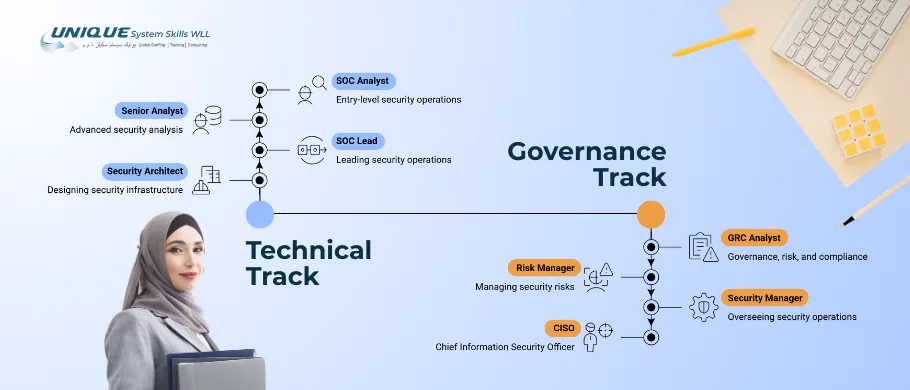
Promotions in these environments are closely tied to regulatory accountability. Professionals who understand compliance mapping, audit controls, and risk documentation are more likely to be promoted into senior and managerial roles.
Why Promotions Are Skill-Driven
In the GCC, promotions often come with increased accountability, including:
- Signing off on security controls
- Leading audits and regulatory reviews
- Managing SOC operations
- Owning incident response decisions
Management promotes individuals who can make sound technical and risk-based decisions under pressure. This trust is built through proven skills, not simply years of service.
How Structured Training Shortens Promotion Timelines
In many GCC organizations, appraisal cycles happen annually. Professionals who demonstrate measurable skill improvement within one review cycle are often considered for elevation into senior roles.
With structured cybersecurity training:
- Professionals improve audit readiness within 6–12 months
- Incident response confidence increases
- Documentation quality improves
- Risk assessment skills become structured
This visibility significantly increases the chances of promotion in the next evaluation cycle.
Why a Cyber Security Course Matters More Than Experience Alone
Experience Without Validation Has Limits
Many experienced professionals struggle to explain how they handle threats and security tasks. However, those who take a focused cybersecurity course often show more confidence and clarity during audits and emergencies.
The course helps you move from saying “I have years of experience” to “I can prove my skills.” In the GCC, being able to prove what you can do is what really matters.
Management Trust and Responsibility
In GCC organizations, especially in banking, oil & gas, and government sectors, promotions increase personal accountability. Senior professionals are required to:
- Approve security control implementation
- Sign compliance documentation
- Defend audit findings
- Make high-pressure incident decisions
Since, leadership teams are risk-conscious, therefore, your tenure isn’t what matters. They promote individuals who reduce organizational exposure. A structured cyber security course builds:
- Decision-making frameworks
- Risk evaluation methodology
- Confidence in regulatory conversations
This reduces perceived leadership risk and accelerates promotion potential.
Real-World Exposure Makes the Difference
Courses that include hands-on labs, SOC simulations and real infrastructure scenarios prepare professionals for real responsibilities. This exposure is important for those transitioning from operational roles into senior positions.
Role of Cyber Security Certifications in Promotions
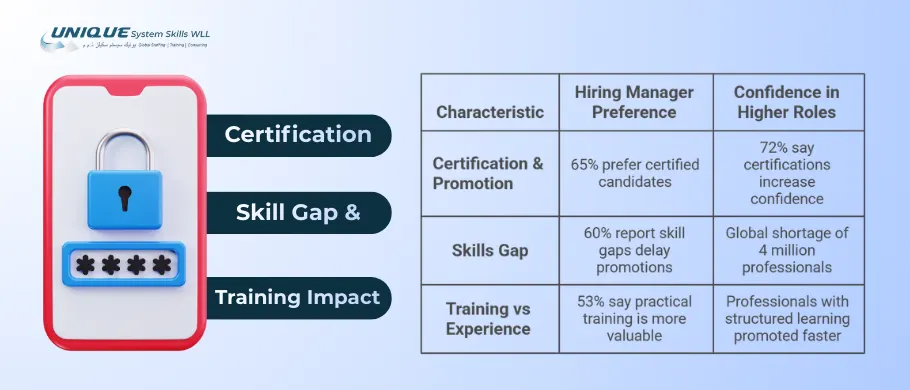
In performance reviews, certifications often help people get promoted. If two people do the same work, bosses usually choose the one who keeps learning.
Certifications show that you are dedicated to your job,Know the latest rules and skills & you are ready for more responsibility.
This is the best way to grow your career in the long run.
Leadership Perception in the GCC
Leadership teams in GCC organizations typically operate within structured, compliance-driven environments. Certifications align with these expectations and reduce the risk when promoting professionals into critical roles.
How Unique System Skills Prepares Professionals for GCC Promotions
Practical, Not Theoretical Training
Unique System Skills offers practical cybersecurity training that aligns with real-world job duties. The course focuses on managing security operations and emergencies, the basics of cloud security, understanding risks and rules & practicing real attacks and defenses.
This training matches how cybersecurity teams actually work in the GCC.
Real-World Scenarios That Matter
Instead of just theory, this training uses real examples of financial institutions, governments’ critical infrastructure, cloud and hybrid environments, regulatory audits, and compliance reviews. This preparation supports professionals aiming for promotions.
Gulf Aligned Curriculum
The lessons are based on what is actually required for cybersecurity jobs in the UAE and the GCC. We focus on building real skills instead of just hollow words. This helps you gain trust and feel more confident in your work.
Promotion Pathways After Completing a Cyber Security Course
Technical Growth Path
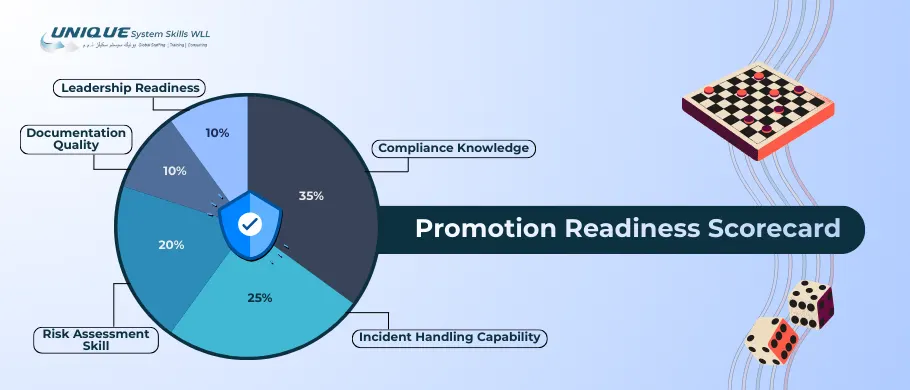
In cybersecurity, you usually move from an analyst to a senior analyst, then to a SOC Lead, and finally to a security architect. At each step, you need better skills & better judgment.
Governance and Leadership Path
Some people move into management and leadership roles, like a GRC Analyst, security manager, or risk lead. These jobs require high-level certifications such as the CISSP and a strong background in cybersecurity training.
Lateral Upgrades That Increase Salary
Career growth is not always vertical. Many professionals move laterally into better-paying jobs like cloud security or security services. These roles offer much higher salaries in the GCC.
Real-World GCC Promotion Scenarios
Banking Sector – SOC to Lead Analyst
A SOC analyst in a UAE bank completed focused cybersecurity training and earned a SOC analyst certification. Within one appraisal cycle, the individual was promoted to a lead role due to improved incident handling & reporting accuracy.
Oil & Gas – Technical to GRC Transition
A network engineer in Saudi Arabia moved into a management role after taking a cybersecurity course about security rules and risks. He got promoted because he knew how to follow the law, not just because of his years of work.
Healthcare – Cloud Security Upgrade
A system administrator in Qatar moved into a cloud security role after structured training and hands-on labs. This move led to increased compensation.
Choosing the Right Cyber Security Course for GCC Career Growth
What to Look For?
When selecting a cyber security course, you should look for
- Practical labs over theory
- Alignment with GCC compliance standards
- Support for relevant certifications
- Instructor experience within the region
Why Practical Training in Cyber Security Course Matters Most
Promotions happen when leaders are comfortable to assign tasks to others. The ability to handle real-world circumstances can be seen by practical instruction, not only by passing exams.
Instructor Experience Is Critical
Training delivered by professionals with real GCC exposure prepares learners for regional expectations, regulatory realities.
Conclusion
Key Takeaways
- Promotions are based on accountability, not tenure
- Compliance knowledge increases leadership trust
- Structured training reduces perceived organizational risk
- Certifications validate skills during performance reviews
- Practical exposure improves visibility in audits and crises
In the GCC, cybersecurity career growth is definitely not about shortcuts. It is built on credibility, competence, and consistency.
A good cybersecurity course and the right certifications give bosses the confidence to promote you. This trust leads to better job positions and a stable career.
Professionals who make the proper investment in cybersecurity training not only improve their abilities but also change how businesses view them. If you are working in UAE, Saudi Arabia, Qatar or Bahrain and aiming for your next appraisal cycle, structured cybersecurity training can position you for leadership within 6–12 months.
In the Gulf region, getting promoted depends on trust. You earn that trust by proving what you can actually do.